TSX-V: CTH
Last: 1.19
Change: -0.04
Vol: 1,760

Commodity
Location
Stage
Feasibility Study
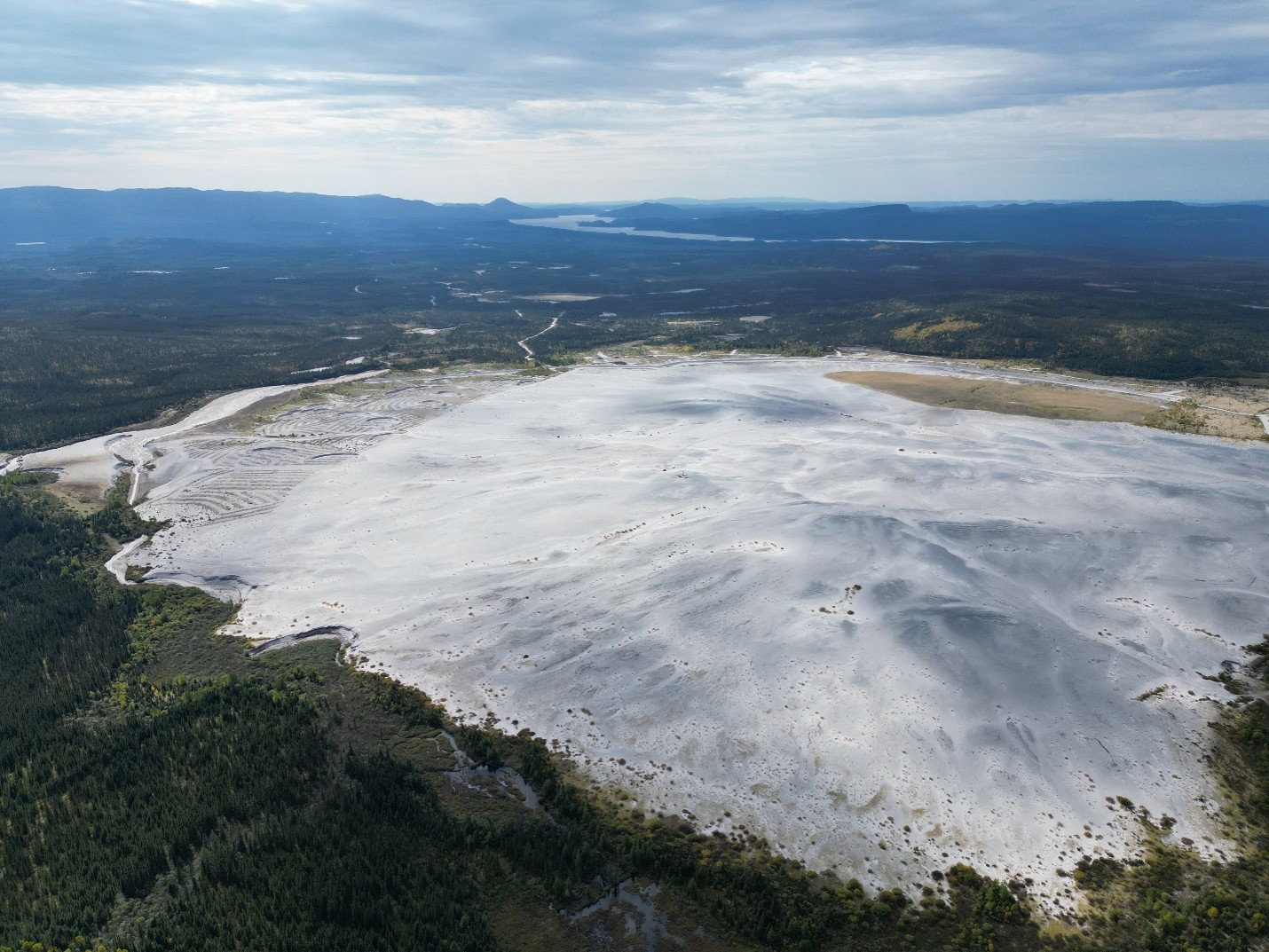
Lac Jeannine is a mine-tailings reclamation and resource-recovery project located in Québec's Côte-Nord region, approximately 290 kilometres north of Baie-Comeau.
The Project is focused on recovering high-purity iron concentrate from approximately six decades-old tailings generated by the former Lac Jeannine iron mine, while progressively rehabilitating what is currently identified as Québec's largest abandoned mine site under government responsibility.
CoTec is advancing Lac Jeannine through a Feasibility Study led by BBA following a positive updated Preliminary Economic Assessment completed in 2026.
The 2026 PEA materially expanded and advanced the Project relative to the previous 2024 study.
The updated Mineral Resource Estimate increased total Mineral Resources by approximately 41%, comprising:
31 million tonnes of Indicated Mineral Resources at 6.82% FeT, containing approximately 2.1 million tonnes of iron; and
71 million tonnes of Inferred Mineral Resources at 6.80% FeT, containing approximately 4.9 million tonnes of iron.
The conversion of 31 million tonnes into the Indicated category is expected to support approximately the first four years of projected production.
The larger Mineral Resource increased the modeled project life from approximately 11 years to 15 years and increased projected life-of-mine concentrate production from approximately 3.8 million tonnes to 5.4 million tonnes.
The PEA contemplates the extraction and processing of approximately 7 million tonnes of historical tailings per year using a relatively simple gravity-based flowsheet.
The Project is designed to produce approximately 360,000 tonnes per annum of high-purity iron concentrate over a 15-year operating life.
The PEA assumes an average concentrate grade of 66.8% FeT, with low levels of silica, alumina, phosphorus and other impurities.
Following the PEA, additional metallurgical testing completed at Corem successfully produced concentrate grading greater than 67% FeT and low in impurities, an important technical milestone as CoTec evaluates the Project's potential to produce high-purity iron suitable for emerging direct-reduction and lower-carbon steelmaking markets.
The 2026 PEA reported:
After-tax NPV7%: US$91.9 million
After-tax IRR: 29.6%
Payback: 2.3 years
Initial capital: US$69.4 million
Average annual concentrate production: approximately 360,000 tonnes
C1 cash cost: US$46.8 per tonne of concentrate
All-in sustaining cost: US$54.5 per tonne of concentrate
Project life: 15 years
The PEA economics were based on an average realized concentrate price of US$145 per dry metric tonne, including a high-grade premium.
The economic assessment does not include potential benefits from government grants, tax incentives or other programs supporting critical minerals, resource recovery or circular-economy projects.
As part of the 2026 PEA, the proposed tailings-extraction method was redesigned around a conveyor-based material-handling system.
The revised approach reduced estimated extraction costs to approximately US$0.65 per tonne of material mined, contributing to lower projected operating costs relative to the 2024 PEA.
The historical tailings require effectively no conventional waste stripping, resulting in an extremely low modeled strip ratio of approximately 0.016:1.
Following iron recovery, process rejects are expected to be deposited into the former Lac Jeannine open pit, supporting the longer-term objective of rehabilitating the historical tailings area and restoring the site as closely as practicable to its natural state.
The current PEA is based solely on the 2026 Mineral Resource Estimate and does not assign economic value to additional tailings located beyond the drilled Mineral Resource boundary.
An additional 28 million to 40 million tonnes of historical tailings has been identified as an Exploration Target outside the current Mineral Resource, with a conceptual grade range of approximately 5.9% to 7.7% FeT.
This Exploration Target is conceptual in nature. There has been insufficient exploration to define this material as a Mineral Resource and it is uncertain whether further exploration will result in its delineation as a Mineral Resource.
CoTec is planning additional drilling as part of the ongoing Feasibility Study program, including work aimed at converting additional Inferred Resources into the Indicated category and evaluating the broader tailings footprint.
The 2026 PEA also excludes potential benefits from the application of Multi-Gravity Separator technology to the Lac Jeannine flowsheet.
CoTec is evaluating the technology as part of ongoing metallurgical work to determine whether additional ultra-fine iron currently lost in conventional gravity-separation circuits can be economically recovered.
Other opportunities being evaluated through the Feasibility Study include:
optimization of the processing flowsheet;
potential utilization of high-silica process tailings;
transportation of concentrate using existing regional rail infrastructure;
renewable power alternatives;
government funding and critical-mineral incentives; and
strategic project-financing partnerships.
BBA is leading the ongoing Feasibility Study, which is currently targeted for completion in Q2 2027.
Environmental baseline work is underway in parallel with engineering and metallurgical programs. CoTec has also received confirmation from the Impact Assessment Agency of Canada that, based on the Project as currently contemplated, it is not expected to be subject to the federal impact assessment process and would instead proceed through Québec's provincial environmental assessment and permitting framework.
The Feasibility Study is intended to further define the Project's Mineral Resources, metallurgy, engineering, capital and operating costs, environmental requirements and development schedule ahead of a potential investment decision.
Lac Jeannine represents a different model of resource development.
Rather than developing a new conventional mine, the Project is designed to recover high-purity iron from material left behind by historical mining activity while progressively rehabilitating a legacy mine site.
The combination of an existing above-ground resource, relatively simple processing, modest initial capital requirements and the potential production of high-purity iron provides CoTec with an opportunity to develop a strategically important iron product while contributing to the restoration of a historical mining footprint.
Technical Disclosure
The 2026 PEA is preliminary in nature and is based on a combination of Indicated and Inferred Mineral Resources. Inferred Mineral Resources are considered too speculative geologically to have economic considerations applied to them that would enable them to be categorized as Mineral Reserves. Mineral Resources that are not Mineral Reserves do not have demonstrated economic viability, and there is no certainty that the results of the PEA will be realized.
The Exploration Target described above is conceptual in nature. There has been insufficient exploration to define the Exploration Target as a Mineral Resource, and it is uncertain whether further exploration will result in the target being delineated as a Mineral Resource.